

How Do You Prepare Your Car for Summer In Dothan?
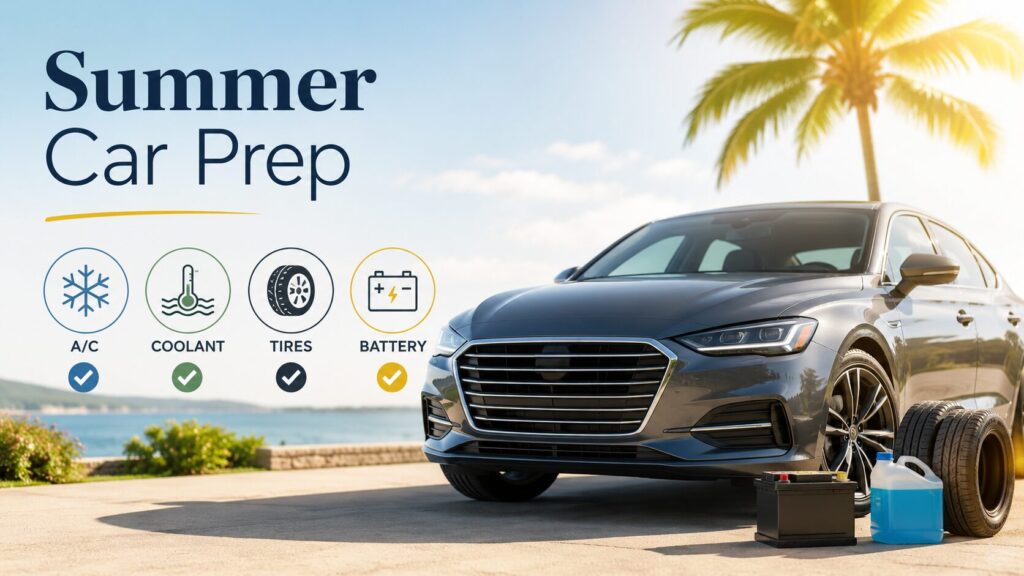
You prepare your car for summer by checking the air conditioning, coolant system, tires, battery, fluids, and basic safety items before extreme heat puts extra stress on your vehicle.
Top 3 Takeaways
- Check your air conditioning, coolant, tires, and battery before temperatures climb.
- Summer heat can expose weak batteries, low fluids, worn tires, and cooling system problems quickly.
- A simple pre-summer checklist can help prevent breakdowns, improve comfort, and keep your vehicle safer on hot roads.
Summer can be tough on your car.
High temperatures, hot pavement, long drives, stop-and-go traffic, and heavy air conditioning use all make your vehicle work harder. Even a small issue, like low coolant or an aging battery, can become a major problem once the heat hits.
The good news is that summer car prep does not have to be complicated.
A quick inspection before the hottest part of the year can help you avoid breakdowns, protect your engine, and make every drive more comfortable. Whether you are commuting, taking a road trip, or just running errands around town, these are the most important things to check before summer arrives.
Why Is Summer Hard on Your Car?
Summer heat affects almost every major system in your vehicle.
Your engine runs hotter, your battery works harder, your tires expand, and your air conditioning system stays under constant demand. If one of those systems is already weak, hot weather can make the problem show up fast.
That is why many drivers notice car trouble during the first stretch of serious summer heat.
A battery that seemed fine in spring may suddenly fail. Tires that looked okay may lose grip or show uneven wear. An air conditioner that was “good enough” may stop blowing cold air when you need it most.
Preparing early gives you time to fix small problems before they become expensive ones.
Summer Car Prep Checklist
Here is a quick overview of what to inspect before summer weather arrives.
| What to Check | Why It Matters in Summer | What to Look For |
| Air conditioning | Keeps the cabin comfortable and helps reduce driver fatigue | Weak airflow, warm air, strange smells, unusual noises |
| Coolant system | Helps prevent engine overheating | Low coolant, leaks, rising temperature gauge |
| Tires | Hot pavement increases tire stress | Low tread, cracking, improper pressure, uneven wear |
| Battery | Heat can shorten battery life | Slow starts, corrosion, age over 3 years |
| Engine oil | Helps protect hot engine parts | Low level, dirty oil, overdue oil change |
| Wipers and washer fluid | Summer storms can reduce visibility quickly | Streaking, dry blades, low washer fluid |
| Emergency kit | Helps during roadside delays | Water, flashlight, jumper cables, tire tools |
This checklist is simple, but it covers the areas most likely to cause summer driving problems.
How Do You Check Your Air Conditioning Before Summer?
You check your air conditioning by turning it on early, setting it to the coldest temperature, and making sure the air gets cold quickly and blows strongly from the vents.
Do this before the first major heat wave.
Let the car run for a few minutes with the A/C on high. If the air is only slightly cool, takes too long to cool down, or blows weakly, the system may need attention.
You should also pay attention to sounds and smells.
A musty smell can point to moisture or a dirty cabin air filter. A clicking, squealing, or rattling sound could mean a worn belt, blower motor issue, or compressor problem.
Common air conditioning warning signs include:
| A/C Symptom | Possible Cause |
| Air is warm | Low refrigerant, compressor issue, leak |
| Weak airflow | Dirty cabin air filter, blower motor issue |
| Musty smell | Moisture, mildew, dirty filter |
| Loud noise | Belt, fan, compressor, or blower problem |
| Cold at first, then warm | Refrigerant issue or system restriction |
Your air conditioning is not just about comfort.
A cool cabin can help reduce fatigue and keep you focused, especially during long drives or heavy traffic. If your A/C seems weak now, it will likely feel much worse once temperatures climb.
Why Is Coolant So Important in Hot Weather?
Coolant is important in hot weather because it helps regulate engine temperature and prevents overheating.
Your engine produces a lot of heat on its own. When summer temperatures rise, the cooling system has to work even harder to keep everything under control.
Coolant, also called antifreeze, flows through the engine and radiator to help move heat away from critical parts.
If the coolant level is low, old, contaminated, or leaking, your vehicle may overheat. An overheating engine can lead to serious damage, including warped parts, blown gaskets, and expensive repairs.
Check the coolant reservoir when the engine is cool.
Never remove the radiator cap while the engine is hot. The system is pressurized, and hot coolant can spray out and cause serious burns.
Look for coolant between the minimum and maximum lines on the reservoir. Also check under the vehicle for puddles or stains, especially green, orange, pink, or yellow fluid.
What Are the Signs of a Cooling System Problem?
The biggest signs of a cooling system problem are a rising temperature gauge, coolant leaks, steam from under the hood, or a sweet smell near the engine.
You may also notice the heater or air conditioner acting strangely.
If your temperature gauge starts climbing above normal, do not ignore it. Pull over safely, turn off the engine, and let the vehicle cool down.
Driving with an overheating engine can cause major damage quickly.
Here are common signs to watch for:
| Warning Sign | What It Could Mean | What to Do |
| Temperature gauge rises | Engine is running too hot | Pull over and shut off the engine |
| Steam from hood | Coolant may be boiling or leaking | Stop driving immediately |
| Sweet smell | Possible coolant leak | Schedule service soon |
| Puddle under car | Radiator, hose, or water pump leak | Have it inspected |
| Low coolant level | Leak or maintenance issue | Refill only with the correct coolant type |
Your cooling system includes more than coolant.
It also includes the radiator, hoses, water pump, thermostat, cooling fans, and pressure cap. Any one of these parts can cause overheating if it fails.
How Should You Check Your Tires Before Summer?
You should check your tires before summer by inspecting the tread, checking tire pressure, looking for cracks or bulges, and making sure the wear pattern is even.
Hot pavement puts extra stress on tires.
As temperatures rise, tire pressure can change. Underinflated tires can build up more heat, wear faster, and reduce fuel efficiency. Overinflated tires may ride rough and wear unevenly.
Use the recommended tire pressure listed on the driver’s door jamb, not the maximum number printed on the tire.
Check tire pressure when the tires are cold, ideally before driving or after the vehicle has been parked for several hours.
Tread depth matters too.
Worn tires can reduce traction, especially during sudden summer storms. If your tires are close to replacement, do not wait until a road trip or heavy rain exposes the problem.
Summer Tire Checklist
| Tire Check | Why It Matters | Quick Tip |
| Tire pressure | Affects safety, comfort, and fuel economy | Check monthly and before road trips |
| Tread depth | Helps with grip and wet-road traction | Replace tires that are too worn |
| Sidewall condition | Cracks or bulges can be dangerous | Inspect both inner and outer sidewalls |
| Uneven wear | May point to alignment or suspension issues | Have it checked before long drives |
| Spare tire | Often forgotten until needed | Make sure it is inflated and usable |
Do not forget the spare tire.
Many drivers check all four tires but forget the spare. If your vehicle has one, make sure it is properly inflated and that the jack and tools are still in place.
Why Do Car Batteries Fail in Summer?
Car batteries fail in summer because high heat speeds up internal wear and can weaken an already aging battery.
Many people associate dead batteries with winter, but summer heat can be just as hard on them.
Heat can cause battery fluid to evaporate and internal components to wear faster. That can leave you with a vehicle that starts fine one day and struggles the next.
If your battery is more than three years old, it is smart to have it tested before peak summer heat.
A battery test is quick and can show whether your battery is still strong enough to handle hot-weather driving. It can also help you avoid getting stranded in a parking lot, driveway, or gas station.
Common signs of a weak battery include:
| Battery Warning Sign | What It Means |
| Slow engine crank | Battery may be losing strength |
| Clicking when starting | Low battery power or connection issue |
| Corrosion on terminals | Poor connection or battery aging |
| Dashboard battery light | Charging system or battery issue |
| Battery older than 3 years | Testing is recommended |
Also check the battery terminals.
Corrosion can interfere with the connection between the battery and your vehicle. If you see white, blue, or green buildup around the terminals, the battery should be cleaned and inspected.
What Fluids Should You Check Before Summer?
Before summer, you should check coolant, engine oil, transmission fluid, brake fluid, power steering fluid, and windshield washer fluid.
Fluids protect your vehicle’s major systems.
When levels are low or fluids are old, your vehicle may not perform as well in hot conditions. In some cases, low fluid levels can lead to serious mechanical damage.
Engine oil is especially important during summer.
Oil lubricates moving engine parts and helps manage heat. If your oil is low, dirty, or overdue for replacement, your engine may experience more wear during hot-weather driving.
Windshield washer fluid is easy to overlook, but it matters.
Summer bugs, dust, pollen, and sudden storms can all make your windshield harder to see through. Make sure the reservoir is full, and your wiper blades are not cracked or streaking.
Should You Get an Oil Change Before Summer?
You should get an oil change before summer if your vehicle is due soon, your oil looks dirty, or you plan to take a long trip.
Hot weather and long drives can put extra stress on your engine.
If you are close to your next oil change, it is usually better to handle it before a road trip or before extreme heat arrives. Fresh oil helps your engine run smoothly and protects against friction.
Check your owner’s manual for the correct oil type and service interval.
Some vehicles require synthetic oil, while others can use conventional or synthetic blend oil. The right choice depends on your vehicle, mileage, driving habits, and manufacturer recommendations.
What Else Should You Check Before Summer Driving?
You should also check your brakes, belts, hoses, lights, wipers, and emergency supplies before summer driving.
Summer often means more travel.
That could be a family road trip, weekend getaway, beach day, camping trip, or a longer daily commute in hotter weather. A quick safety check can make those drives less stressful.
Brake performance is always important, especially in traffic or on highways.
Listen for squeaking, grinding, or vibration when braking. If the brake pedal feels soft, the vehicle pulls to one side, or stopping distance feels longer, schedule an inspection.
Belts and hoses should also be checked.
Heat can make rubber parts more likely to crack, soften, or fail. A damaged belt or hose can quickly lead to overheating, loss of power steering, or a roadside breakdown.
Quick Summer Readiness Scorecard
Use this quick table to decide whether your car is ready for summer.
| System | Ready for Summer | Needs Attention |
| A/C | Blows cold air quickly | Warm air, weak airflow, odor, noise |
| Coolant | Level is correct, no leaks | Low coolant, puddles, overheating |
| Tires | Proper pressure and good tread | Cracks, low tread, uneven wear |
| Battery | Starts quickly, terminals clean | Slow start, corrosion, older battery |
| Oil | Clean and at proper level | Low, dirty, or overdue |
| Wipers | Clear the windshield well | Streaking, skipping, cracked rubber |
| Lights | All lights work | Dim, flickering, or burned-out bulbs |
If several items fall into the “needs attention” column, handle them before the hottest days arrive.
How Do You Prepare for a Summer Road Trip?
You prepare for a summer road trip by checking your vehicle’s main systems, planning your route, packing emergency supplies, and making sure your tires and fluids are ready for long-distance driving.
Road trips are harder on vehicles than short local drives.
Your engine runs for longer periods, your tires stay hot, and your air conditioning may run for hours at a time. If your vehicle already has a weak spot, a long summer drive can reveal it.
Before leaving, check the tire pressure, oil level, coolant level, battery condition, and A/C performance.
Pack water, phone chargers, jumper cables, a flashlight, basic tools, a tire pressure gauge, and a first-aid kit. It is also smart to keep your insurance card, registration, and roadside assistance information easy to find.
What Should You Keep in Your Car During Summer?
During summer, you should keep water, a phone charger, a flashlight, jumper cables, a tire pressure gauge, basic tools, and emergency contact information in your car.
A small roadside kit can make a big difference.
Even a simple delay can feel more serious in extreme heat. Having water, shade, and a working phone charger can help you stay safer while waiting for help.
Here is a practical summer emergency kit:
| Item | Why You Need It |
| Bottled water | Helps during heat-related delays |
| Phone charger | Keeps your phone powered |
| Flashlight | Useful at night or in low visibility |
| Jumper cables | Helps with weak or dead batteries |
| Tire pressure gauge | Makes it easy to check inflation |
| First-aid kit | Useful for minor injuries |
| Basic tools | Helpful for small roadside issues |
| Paper towels or wipes | Useful for spills, dirt, and checking fluids |
Avoid leaving heat-sensitive items in the car.
Electronics, medications, aerosol cans, and certain personal items can be damaged by extreme cabin temperatures. Always check labels and store important items safely.
When Should You Schedule a Summer Vehicle Inspection?
You should schedule a summer vehicle inspection before the hottest weather arrives, before a long trip, or anytime you notice warning signs like weak A/C, overheating, slow starting, or tire problems.
A pre-summer inspection can be quick and affordable.
It can also help you avoid bigger repairs later. A technician can check the cooling system, battery, belts, hoses, tires, brakes, fluids, and A/C system all at once.
This is especially helpful if your vehicle is older, has higher mileage, or has not been serviced recently.
It is also a smart move if you recently purchased a used vehicle and want extra peace of mind before summer driving.
Simple Summer Car Prep Schedule
| When | What to Do |
| Early spring | Check A/C, battery, tires, and coolant |
| Before first heat wave | Inspect fluids, belts, hoses, and wipers |
| Before road trips | Check tire pressure, oil, coolant, and lights |
| Monthly during summer | Recheck tire pressure and fluid levels |
| Anytime warning lights appear | Schedule service or stop driving if needed |
This schedule keeps things simple.
You do not have to inspect everything every day. Just build a habit of checking the basics before heat, travel, and long drives.
Final Thoughts: Is Your Car Ready for Summer?
Your car is ready for summer when the A/C blows cold, the coolant system is healthy, the tires are properly inflated, the battery is strong, and all major fluids are at the correct level.
Summer car prep is mostly about prevention.
A few simple checks can help you avoid uncomfortable drives, unexpected repair bills, and roadside problems. The earlier you inspect your vehicle, the easier it is to fix small issues before they become major summer headaches.
At Auto Smart, we’re your dealer FOR The People, and we are here to help you find a vehicle that fits your life, your budget, and your summer plans. Browse our latest inventory today. Ready to get started? Fill out our secure credit application.
Frequently Asked Questions About Preparing Your Car for Summer
How do I know if my car is ready for summer?
Your car is ready for summer if the air conditioning works well, the coolant level is correct, the tires are properly inflated, and the battery tests strong. You should also check the oil, wipers, lights, and emergency supplies.
What is the most important thing to check before hot weather?
The cooling system is one of the most important things to check before hot weather. Low coolant, leaks, or a failing cooling fan can cause overheating, especially in traffic or on long drives.
Can summer heat kill a car battery?
Yes, summer heat can weaken a car battery and shorten its lifespan. If your battery is more than three years old or your vehicle starts slowly, have the battery tested before peak summer temperatures arrive.
Should I check tire pressure more often in summer?
Yes, you should check tire pressure regularly in summer because temperature changes can affect inflation. Proper tire pressure improves safety, handling, fuel economy, and tire life.
Why is my air conditioner not blowing cold air?
Your air conditioner may not blow cold air because of low refrigerant, a leak, a compressor issue, a dirty cabin air filter, or an electrical problem. If the air is warm or airflow is weak, have the system inspected.
Should I get my car inspected before a summer road trip?
Yes, you should get your car inspected before a summer road trip, especially if the trip is long or your vehicle has higher mileage. A quick inspection can catch tire, battery, coolant, brake, and fluid issues before you leave.
